Millennial Stone Cleaner

Clarissa Wilson, Daughter of Betsy Ross — Fort Madison, Iowa

Fort Madison City Cemetery, Fort Madison, Iowa · 2026
Partner: Jean Espy Chapter, Daughters of the American Revolution
Monument conservation and cleaning

The Work

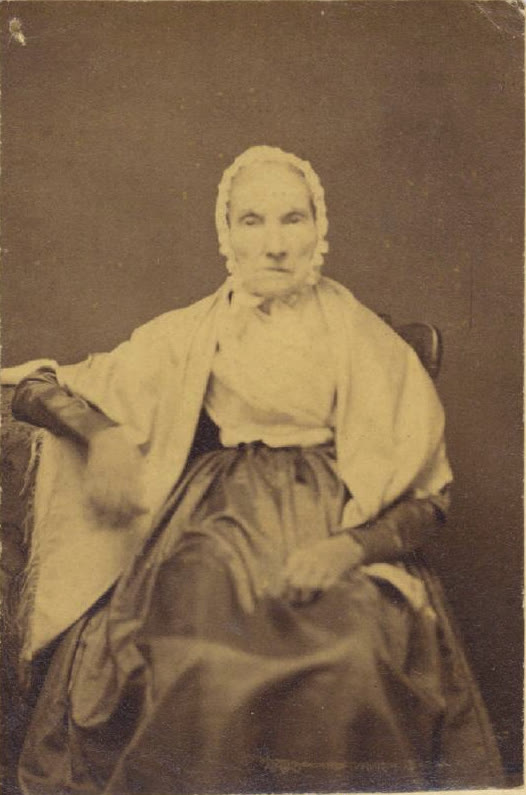
Clarissa Sidney Wilson (1785–1864) was the oldest daughter of Betsy Ross, the Philadelphia upholsterer remembered for sewing the first American flag. Clarissa worked alongside her mother in the family trade and carried it on for roughly 45 years, listed in the Philadelphia city directory as a Ship Colours Maker. In 1857 she retired to Fort Madison to be near her daughter Rachel Albright, and when she died in 1864 she was buried in Fort Madison City Cemetery beneath a white marble tablet.

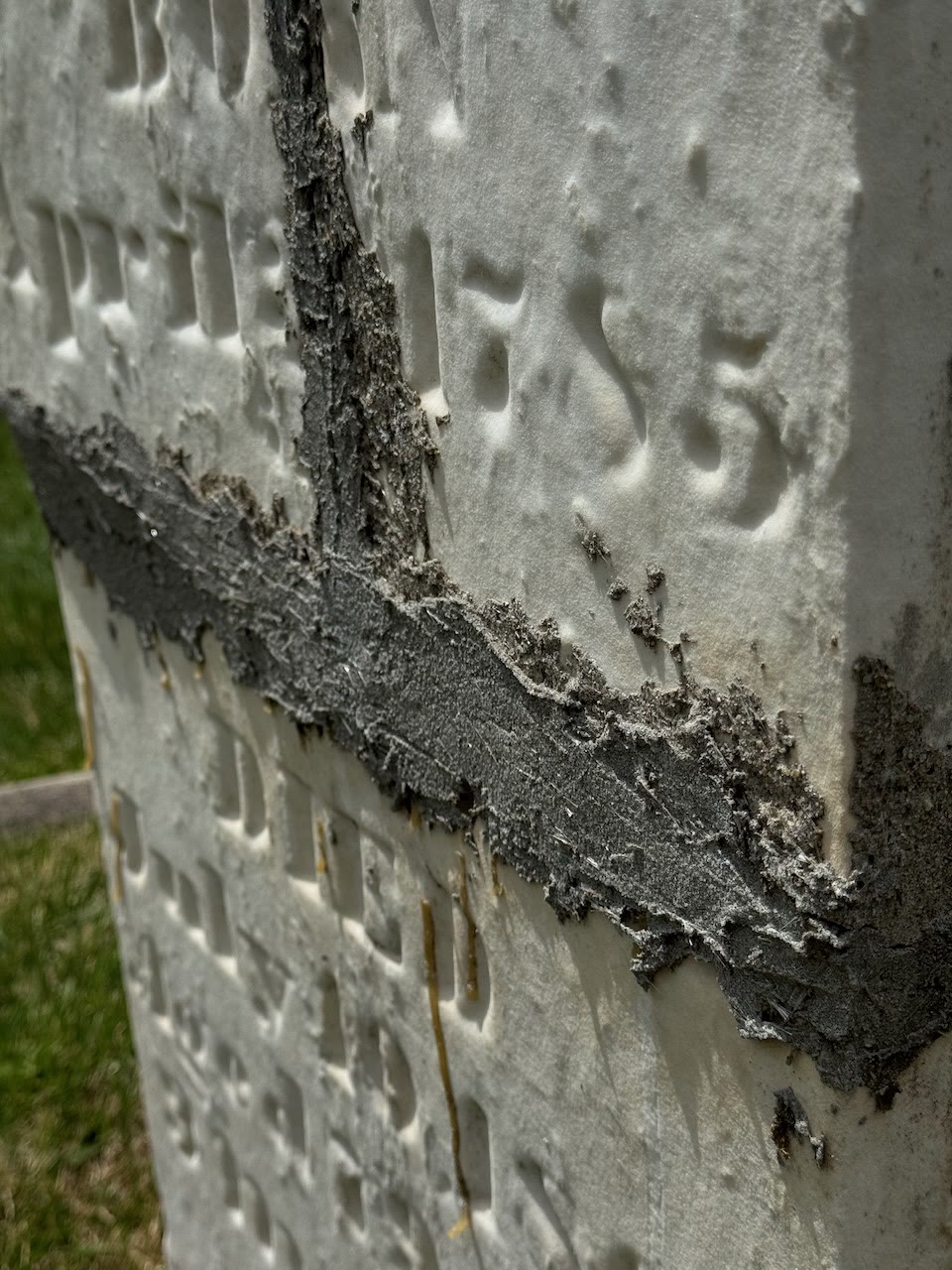
The tablet had been repaired twice before, once with an old discolored epoxy and once with grey Portland cement. The prior repairs left significant material on the surface of the stone, and the joints were poorly aligned. After the original limestone keyway failed, the stone had also been wet set into Portland cement at the base.

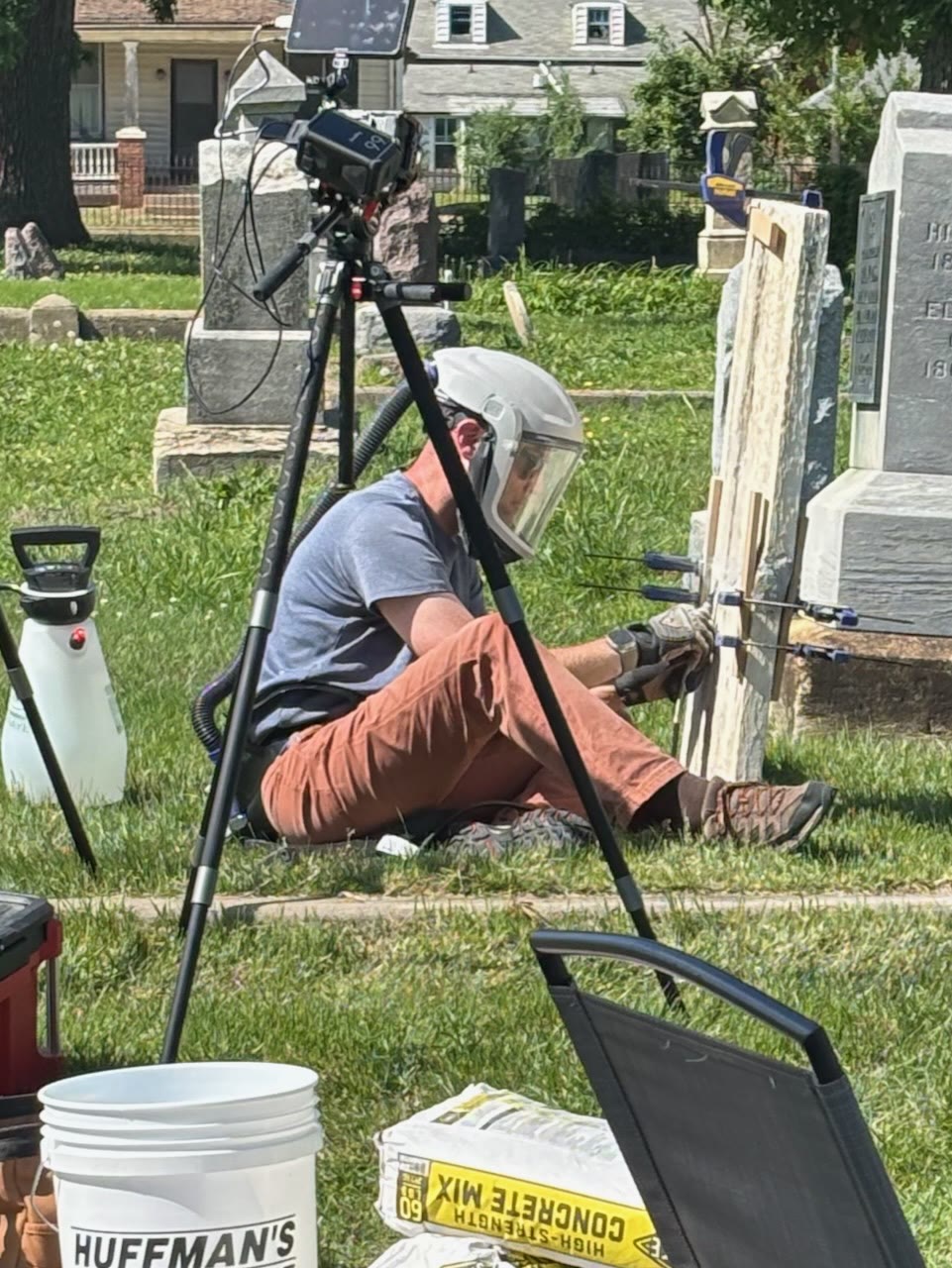
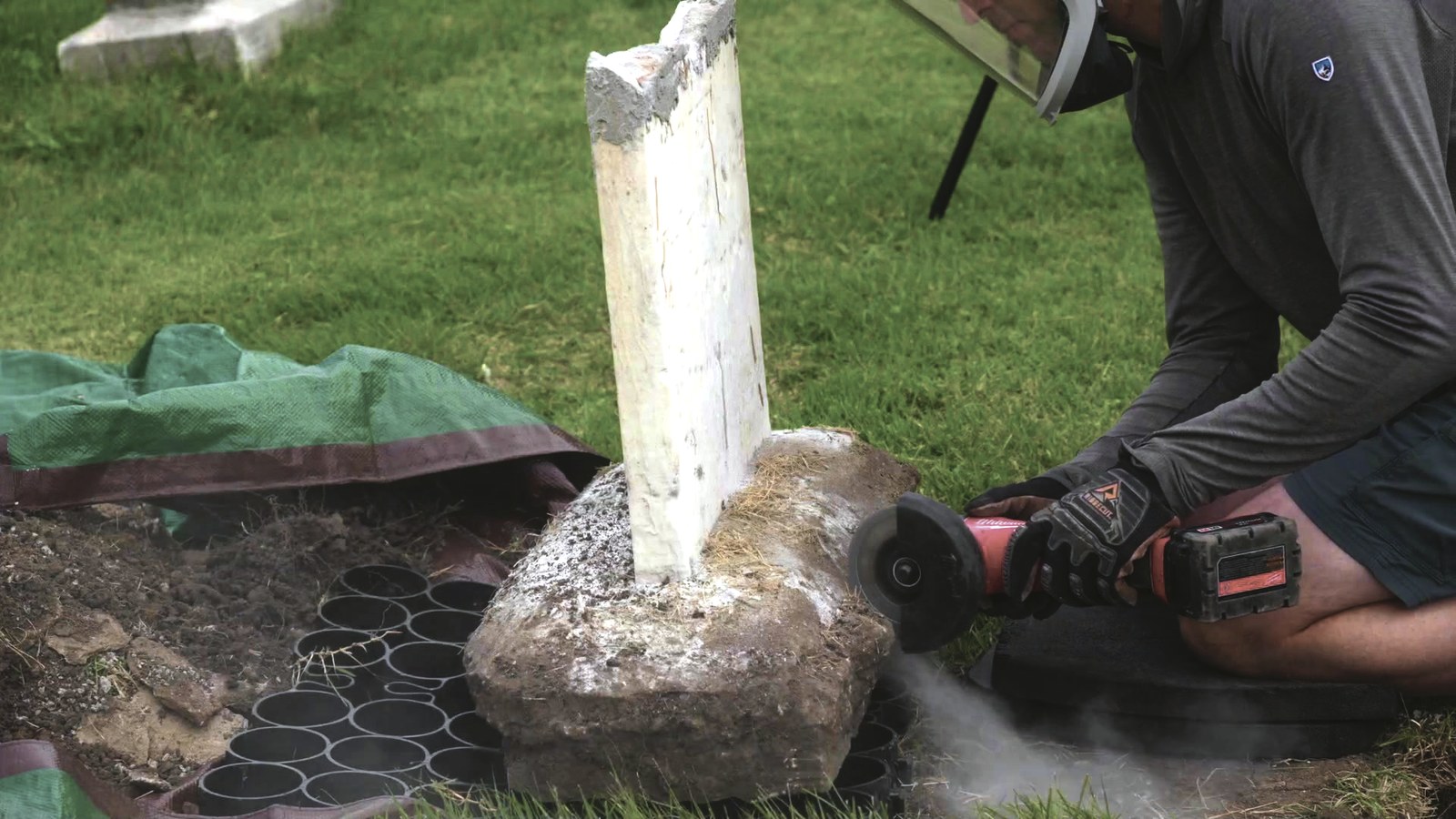
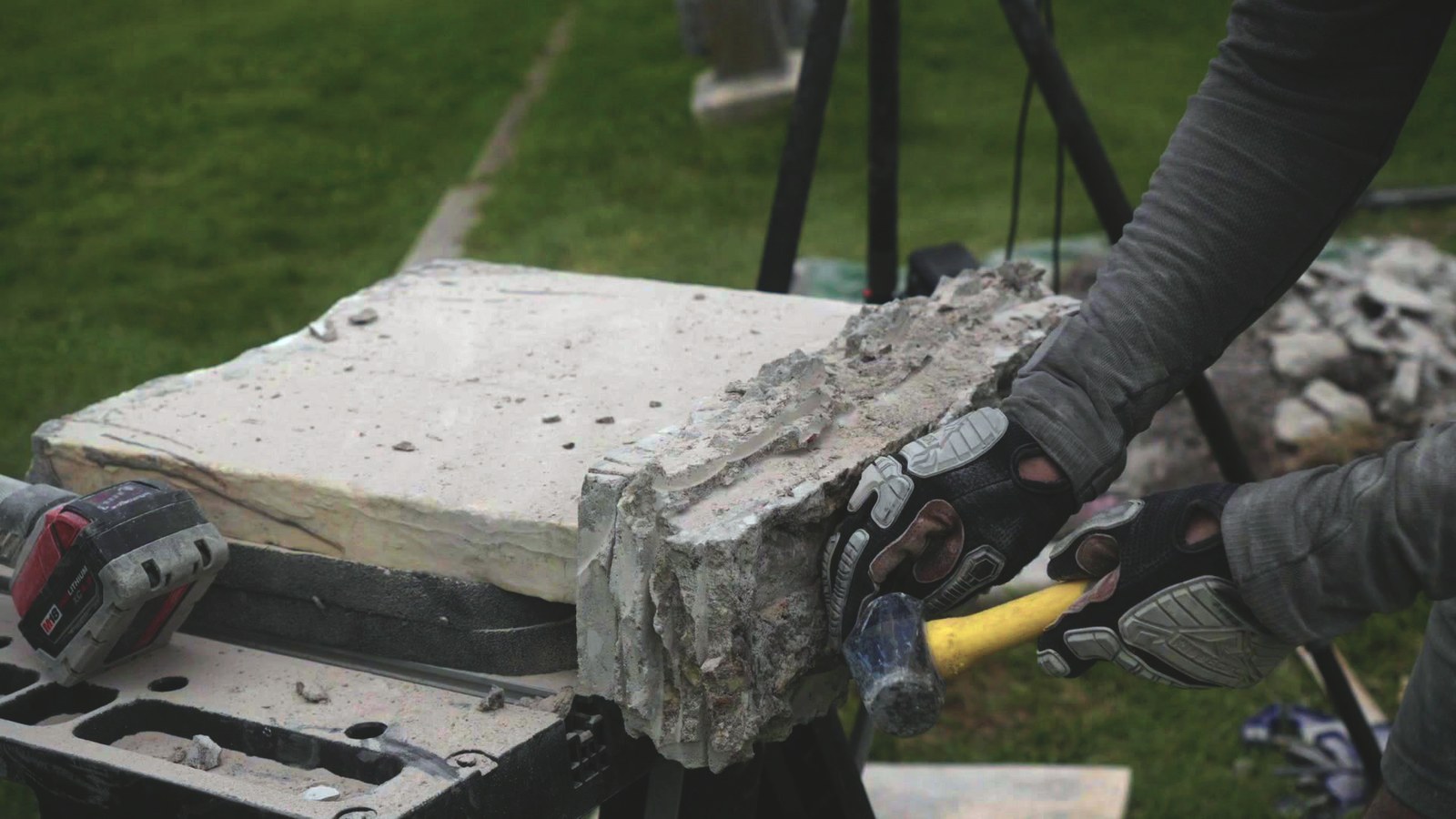
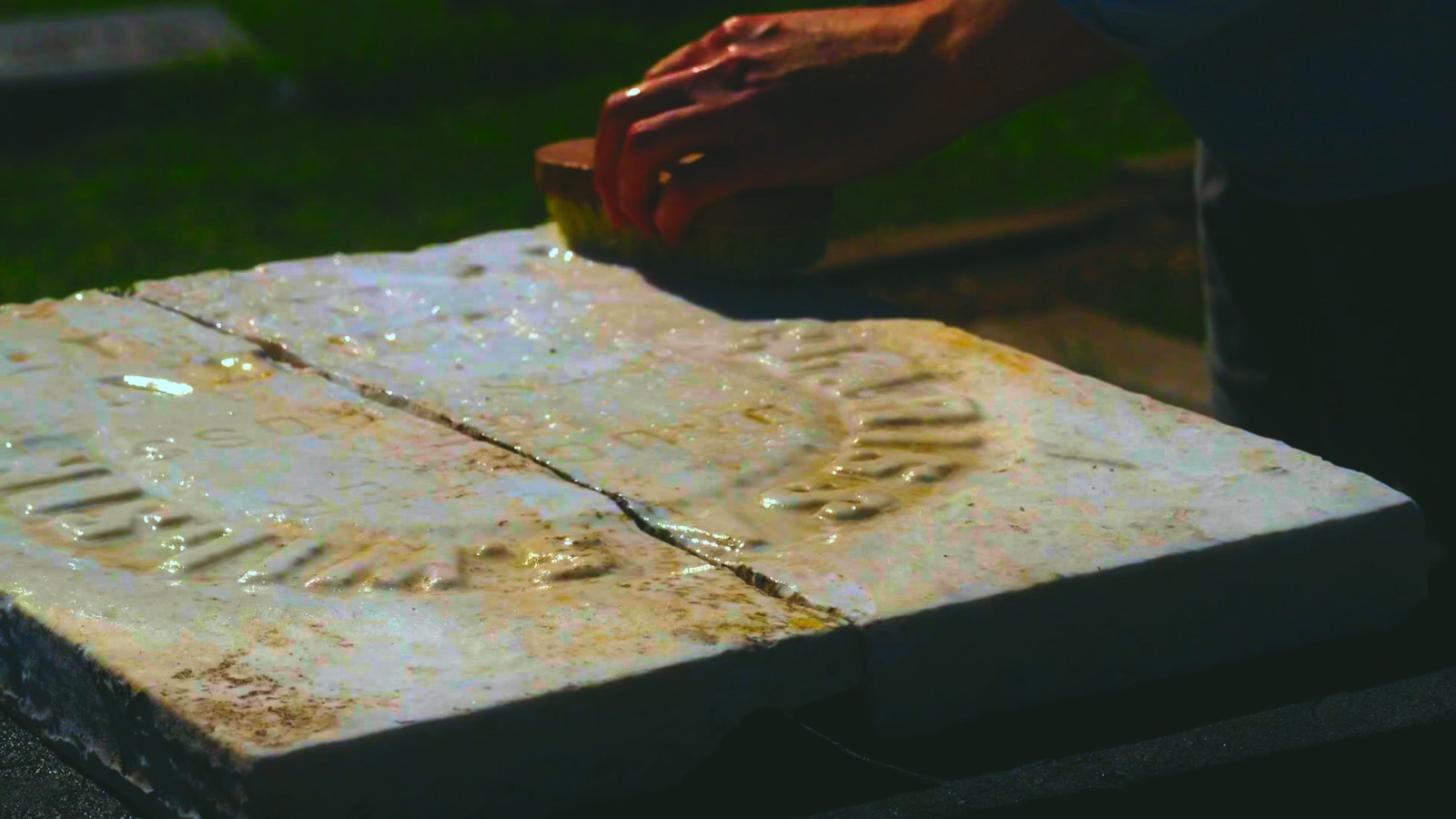
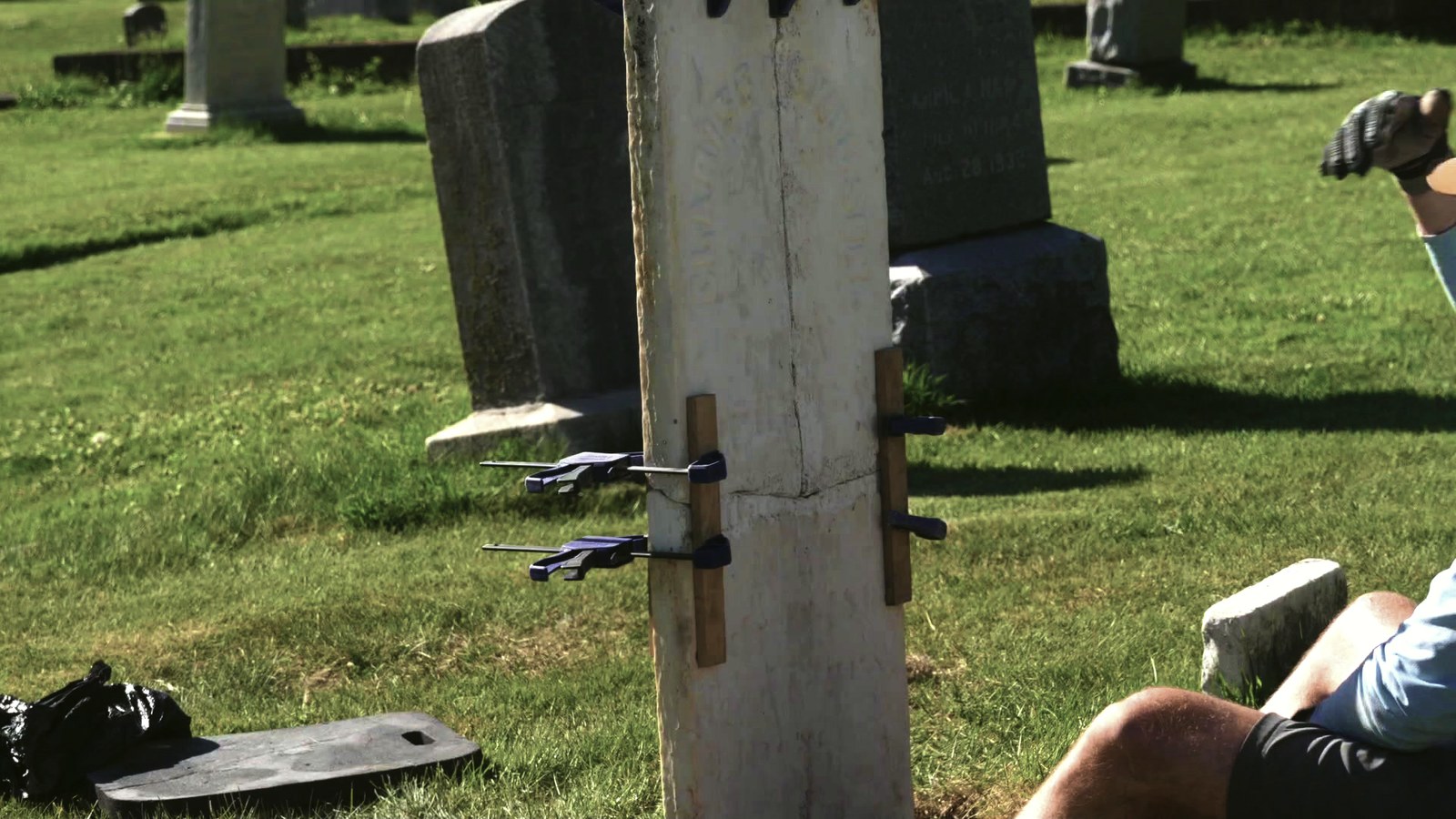
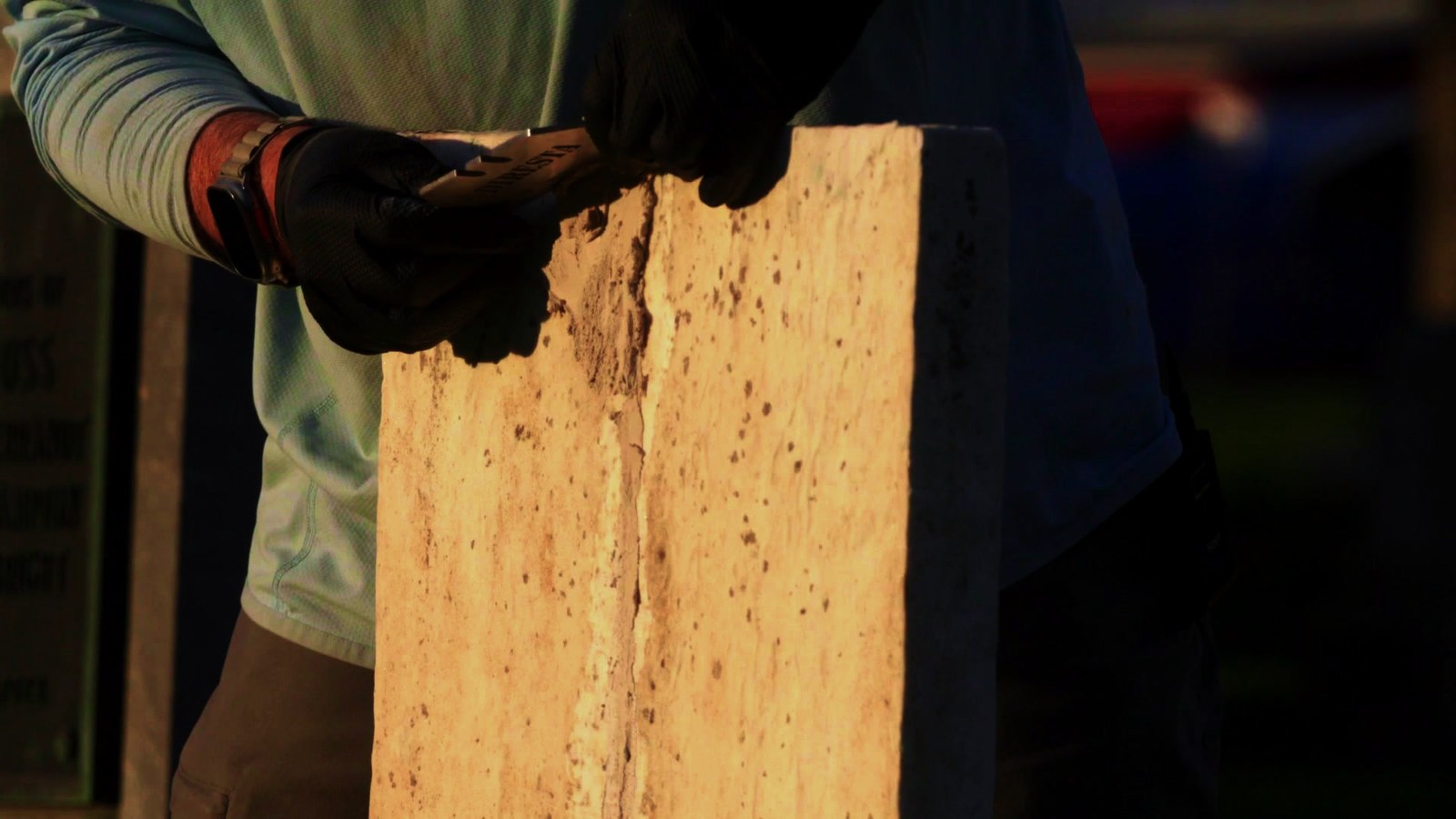
I worked slowly with a rotary tool inside the joint to remove the old repair material and separate the pieces, with clamps and battens supporting the stone. A grinder roughed out the concrete keyway, followed by hammer and chisel and the rotary tool. The stone was cleaned with water, a conservation biocide, and a soft bristle brush.

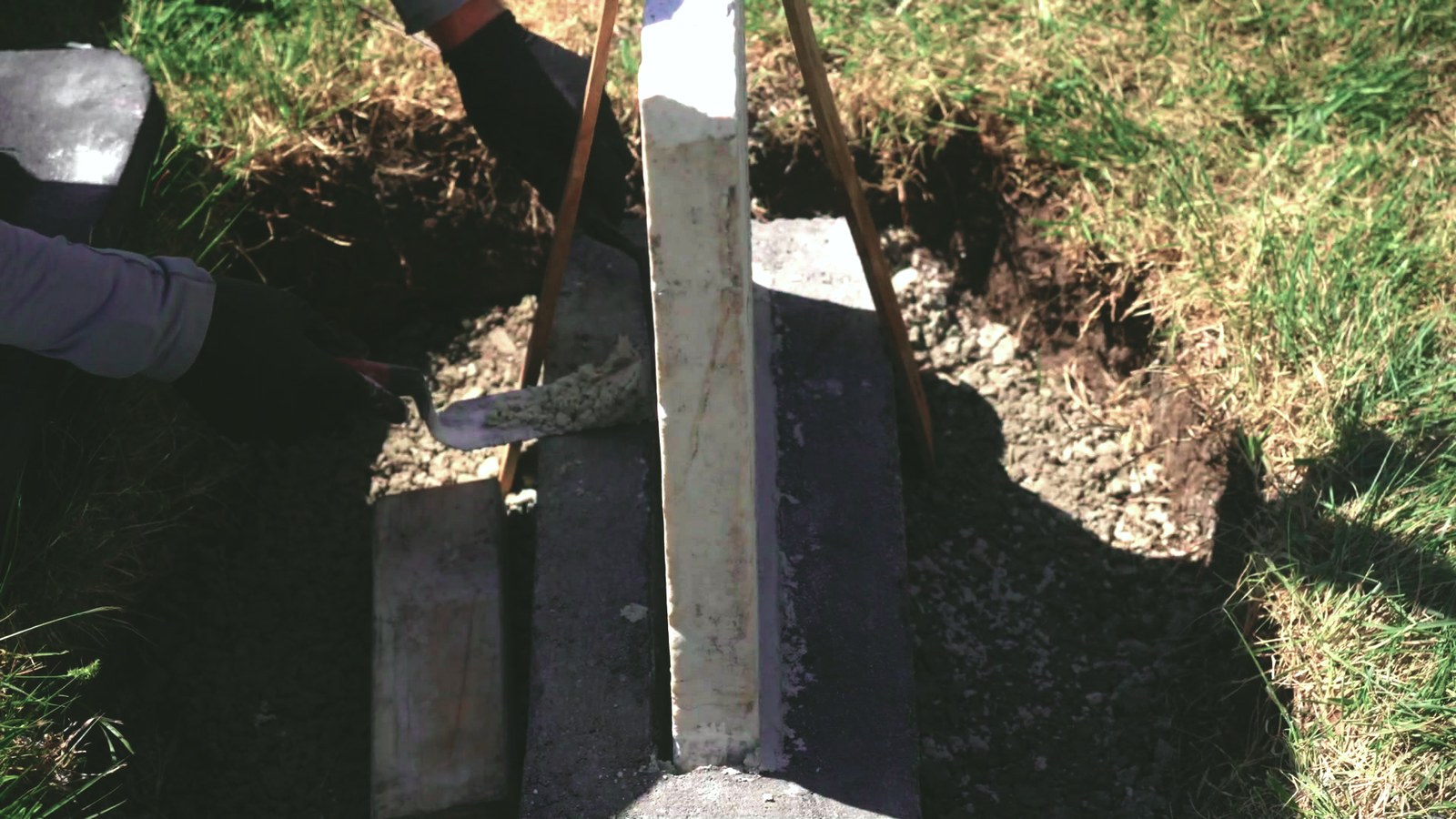
I formed a new concrete keyway, and the lower fracture was set in the keyway with NHL 3.5 lime mortar. The fractured pieces were rejoined with a knife-grade stone epoxy. Areas of loss in the joints and the top rear of the stone were filled with a repair mortar.

Gallery
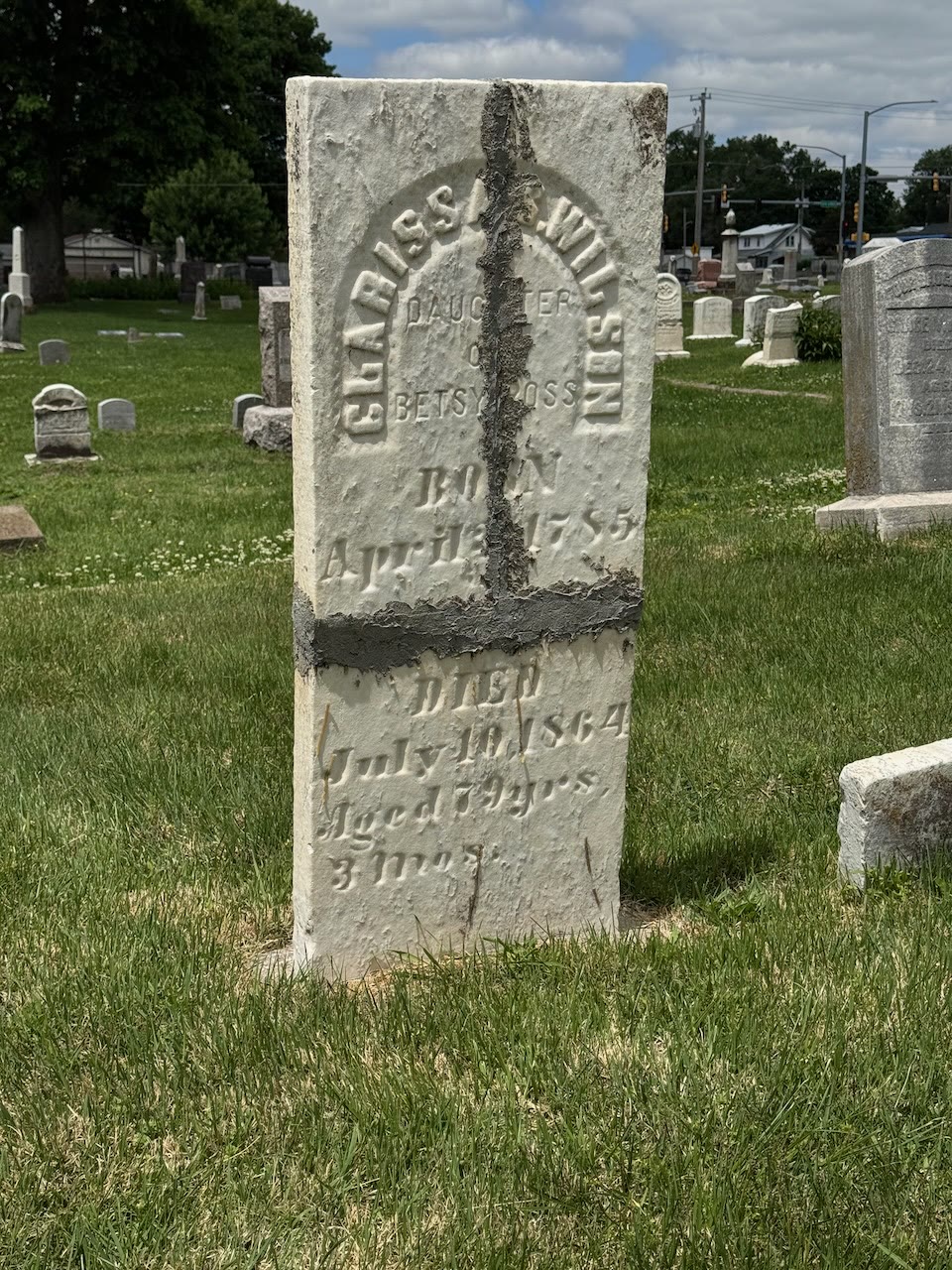
The tablet as I found it. Two earlier repairs left significant material on the surface of the stone and the joints were poorly aligned.
Old discolored epoxy and grey Portland cement from the earlier repairs.
Working slowly with a rotary tool inside the joint to remove the old repair material and separate the pieces. Clamps and battens supported the stone.
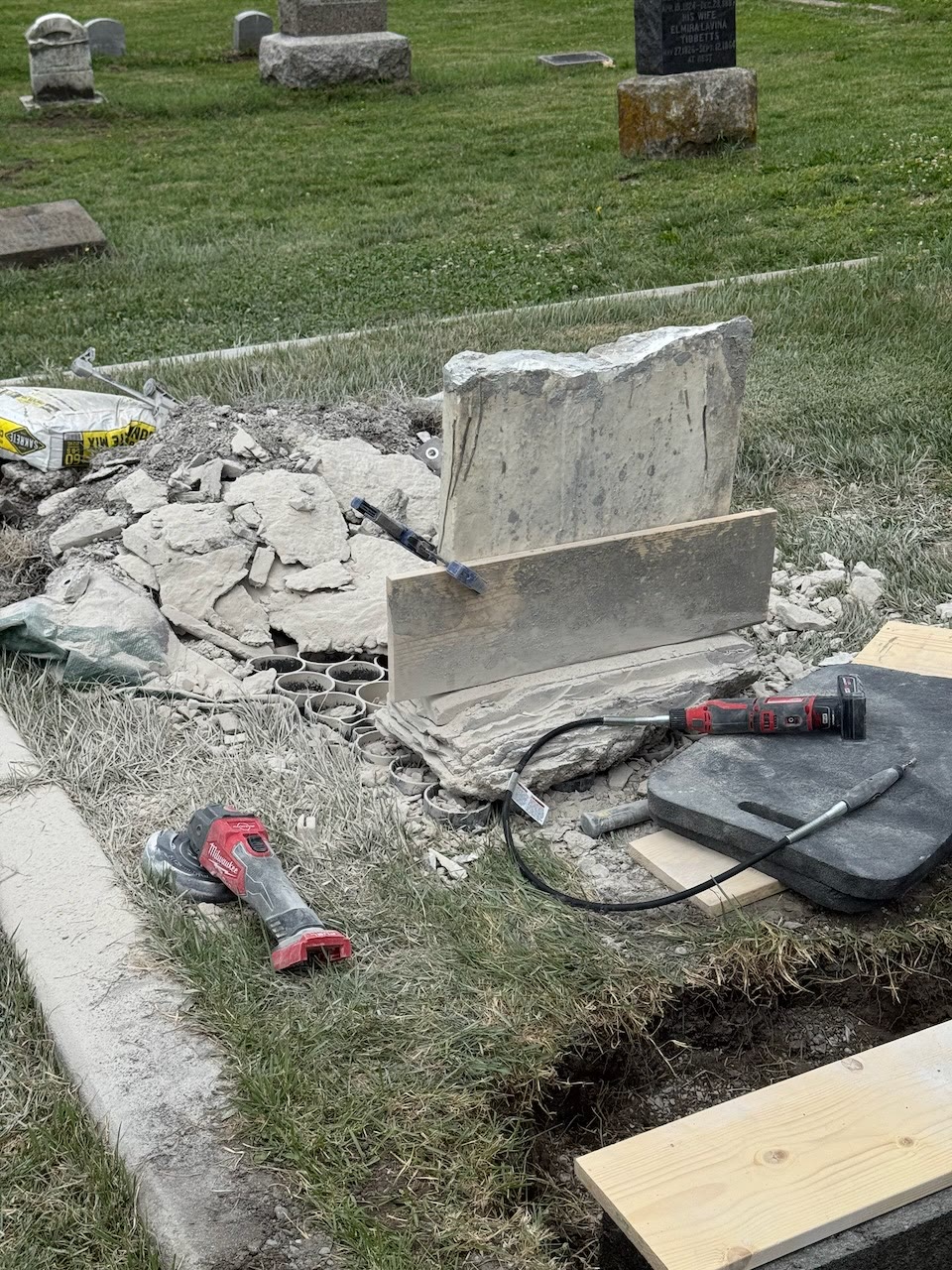
Removing the failed base. The tablet had been wet set into Portland cement after the original limestone keyway failed.
A grinder roughed out the concrete keyway.
Hammer and chisel work followed the grinder, then the rotary tool.
Cleaned with water, a conservation biocide, and a soft bristle brush.
The lower fracture was set in the keyway with NHL 3.5 lime mortar.
The fractured pieces rejoined with a knife-grade stone epoxy.
Areas of loss in the joints and the top rear of the stone were filled with a repair mortar.
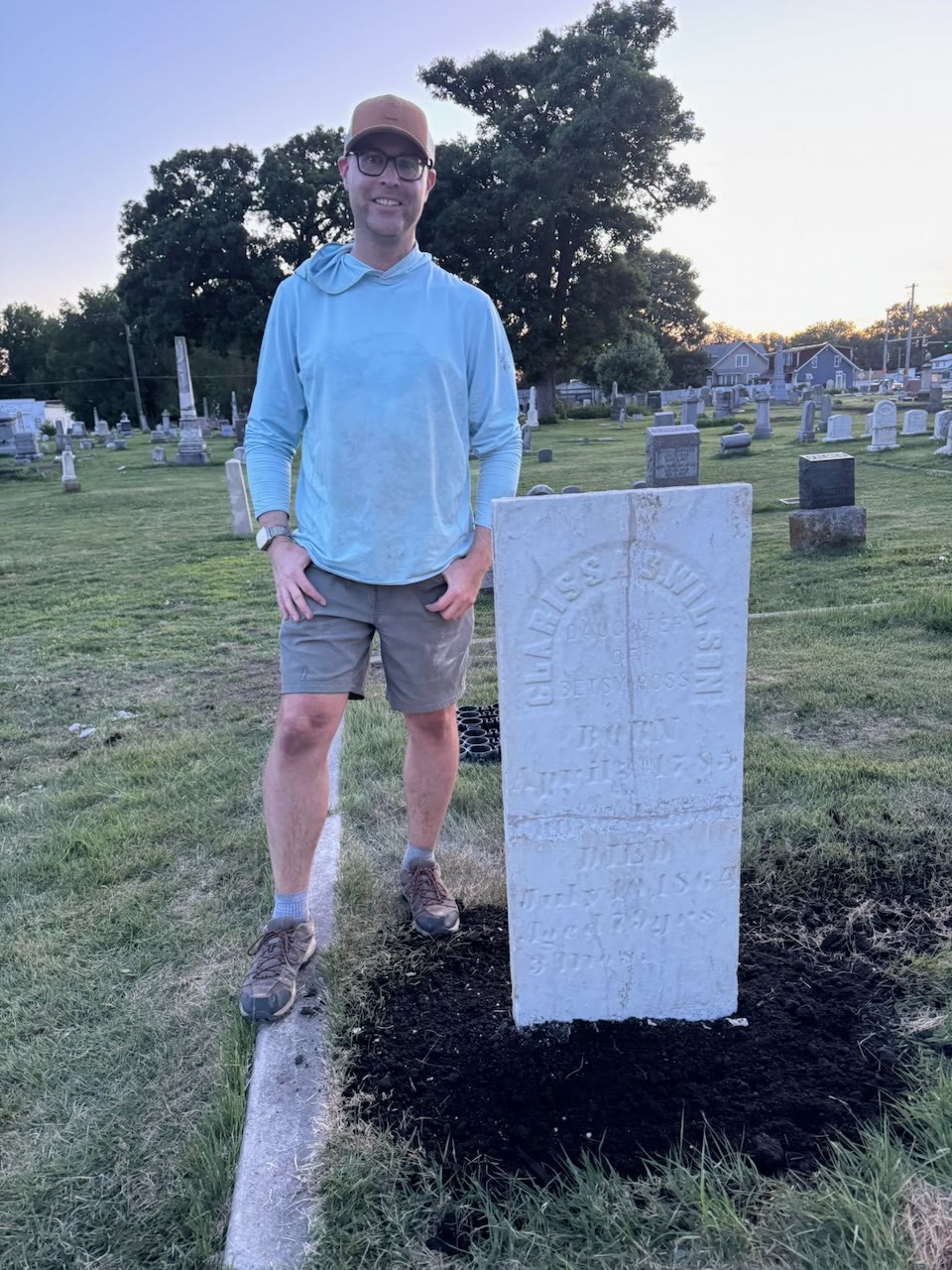
The finished stone reset in fresh soil.
Portrait of Clarissa Sidney Wilson. Image sourced by Jessica Conklin, Cherry Tree Genealogy.